Specialty Populations
College Mental Health
College brings academic pressure, new independence, social change, and often the first serious mental health challenges of someone's life. shrinkMD provides flexible, private psychiatric care that fits a student's schedule and meets these years where they are.
Medically reviewed by Shariq Refai, MD, MBA, FAPA, board certified psychiatrist · Last reviewed June 7, 2026 · Editorial policy

What we help with
Common concerns in college
College is a common time for mental health conditions to first appear. We commonly help with:
- Anxiety and panic around exams, performance, and the future
- Depression, low motivation, and isolation
- Adjustment, homesickness, and identity questions
- Sleep problems and overwhelm
- First time experiences of a mental health condition
How it works
Care that fits campus life
Flexible scheduling
Secure video visits that work around classes, breaks, and a packed schedule.
Accurate evaluation
A thorough first assessment, since college is when many conditions first show up and need a careful diagnosis.
A right sized plan
Therapy coordination and non controlled medication only when appropriate, matched to a student's life.
Continuity that travels
Care that can continue across semesters and between home and school, within the states we serve.
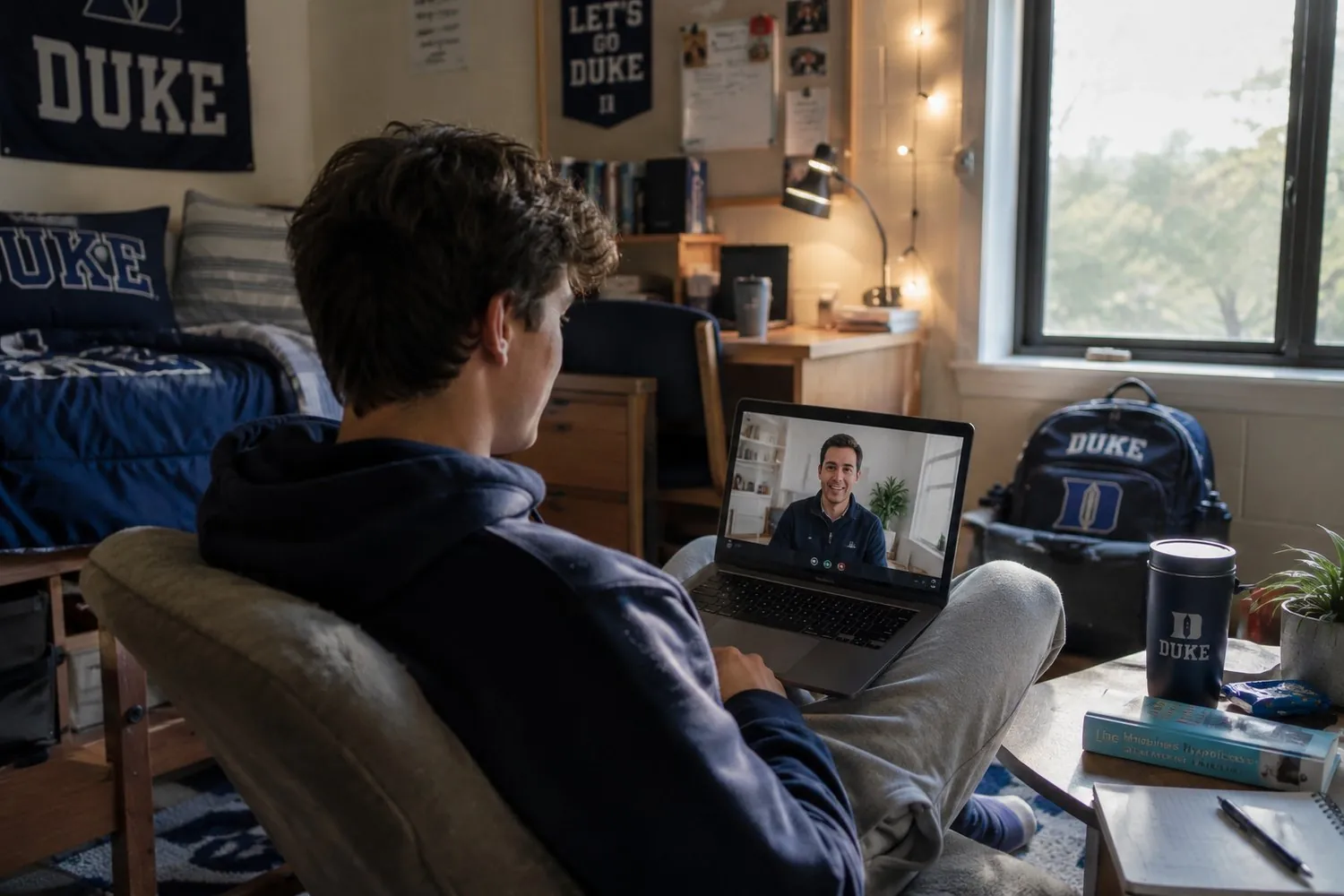
Care that fits a student schedule is care a student will actually use.
A high risk window
Why these years hit so hard
Roughly three quarters of lifetime mental health conditions begin by the mid twenties, which makes college the single most common stage for first episodes of depression, anxiety, panic, and bipolar disorder. Stack on disrupted sleep, academic pressure, new independence, alcohol, and distance from home supports, and symptoms surface fast.
Treating a first episode well matters beyond the semester. Early, adequate treatment changes the long term course of most conditions.
Built for student life
Care that follows the academic calendar
Campus counseling centers do important work but are often capped at a handful of sessions with long waits. We complement them: full psychiatric evaluations, medication management with real follow up, and appointments that continue through winter break and summer as long as you are in a state where your clinician is licensed.
Visits fit between classes from a dorm room or a parked car, and parents are involved exactly as much as you choose.
First episodes
Getting the first diagnosis right
The college years are when most psychiatric conditions first appear, which makes careful diagnosis at this age unusually consequential. Normal adjustment struggles, substance effects, sleep deprivation, depression, and the first hypomanic episodes of bipolar disorder can all look similar in a stressed student.
A rushed label at twenty can shape treatment for a decade. We take the time to separate a hard semester from an emerging condition, and we say plainly when watchful waiting is the right call.
Family and privacy
Parents, roommates, and boundaries
At eighteen, your care is legally yours. We do not report to parents, and nothing reaches your school. Many students still choose to involve family, and we help you do that on your terms, whether that is a one time joint visit or simply coaching you on what to share.
For worried parents and friends: the signs that matter most are withdrawal, slipping attendance, sleep flipped upside down, and talk that sounds hopeless. Encouraging one evaluation is a reasonable, respectful ask.
What we treat
The patterns we see most in students
Student life produces a recognizable cluster:
- Anxiety and panic that spike around exams and presentations
- Depression that flattens motivation mid semester
- Sleep schedules so inverted they imitate mood disorders
- Attention concerns, evaluated honestly: we assess thoroughly, treat with non stimulant options where appropriate, and refer when stimulants are truly indicated
- Homesickness and adjustment struggles that deserve support without being overdiagnosed
- Eating concerns, screened early and referred to specialty care when needed
Keep exploring
Related care and next steps
Frequently asked questions
Good questions, clear answers
Can you see students in their home state and school state?
We can provide care wherever we're licensed, as long as you're physically located in one of those states at the time of the visit. Continuity across home and school is possible within those states.
Do you prescribe stimulants for studying or ADHD?
No. We do not prescribe controlled substances, including stimulants. We focus on safe, evidence based, non controlled treatment.
Is it confidential from my school or parents?
Care is private and HIPAA compliant. For adults, your health information is yours, with the usual legal protections.
Can I keep my clinician over summer and winter break?
Yes, as long as you are physically in a state where your clinician is licensed at the time of each visit. For many students that continuity through breaks is the biggest advantage over campus only care.
Will my parents be told anything about my care?
Not without your consent. At eighteen your care is legally yours. Many students choose to involve family on their own terms, and we can help you plan what to share.
Can you help with ADHD if you do not prescribe stimulants?
We complete a careful evaluation, which often uncovers anxiety, depression, or sleep deprivation imitating ADHD. When ADHD is confirmed, we treat with non stimulant options where appropriate and refer you for stimulant management when that is truly indicated.
What happens if I hit a crisis during finals or midterms?
You use the crisis resources we give every patient, including 988, and we see you promptly for follow up. We also plan ahead: students with known rough seasons schedule check ins before the pressure peaks.
Will using shrinkMD show up on my student record or insurance?
No. Nothing reaches your school, and because we do not bill insurance, there is no claim attached to a family plan for anyone to see.
Sources
Sources and further reading
Get started with college mental health care
These years are big. Support shouldn't be hard to get. Choose your state, complete the intake, and book your evaluation online.
Join Our Waiting List