Specialty Populations
First Responders
First responders run toward what others run from. Over time, repeated exposure to crisis and trauma adds up. shrinkMD provides private, practical psychiatric care that respects the culture of the job and the realities of shift work.
Medically reviewed by Shariq Refai, MD, MBA, FAPA, board certified psychiatrist · Last reviewed June 7, 2026 · Editorial policy
What we help with
The weight the job carries
Repeated exposure to crisis leaves a mark. We commonly help with:
- PTSD symptoms and trauma responses
- Chronic stress and hypervigilance
- Depression, irritability, and mood changes
- Sleep disturbance and nightmares
- Emotional numbing and recovery after critical incidents
How it works
Practical, private care
Flexible, discreet scheduling
Secure video visits around shifts, with the privacy the role requires.
Trauma aware evaluation
A careful assessment that recognizes trauma responses, chronic stress, and mood conditions.
A real world plan
Therapy coordination and non controlled medication when appropriate, built for the job.
Confidential continuity
HIPAA compliant care kept separate from your department.
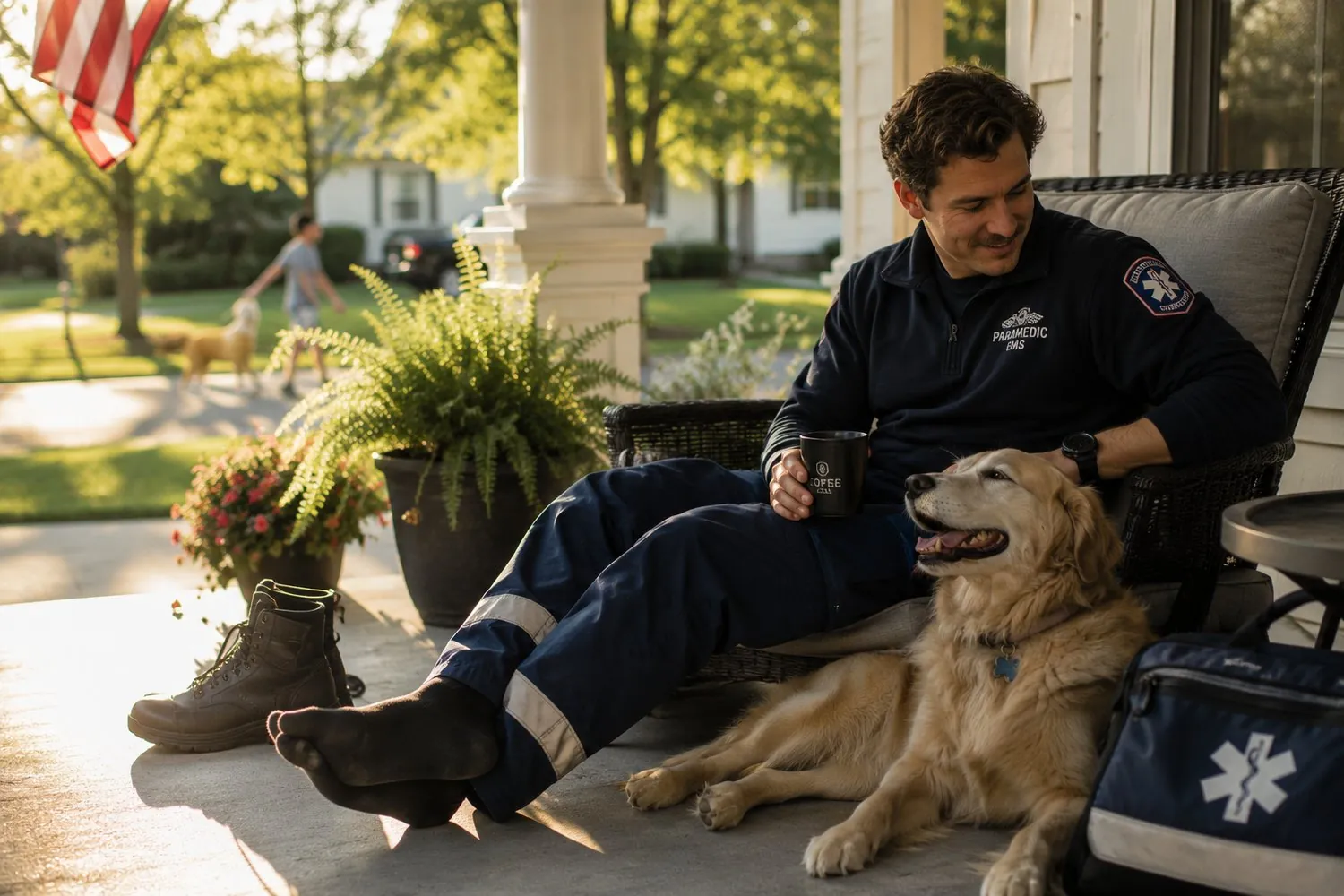
Strength includes getting support. The toughest people still carry a load.
Culture competent care
Hypervigilance was an adaptation first
Scanning rooms, sitting facing the door, sleeping light: these start as job skills. The trouble begins when the nervous system cannot power down off shift, and the same alertness that protects you at work erodes sleep, patience, and closeness at home. Trauma in this work is also cumulative, built from hundreds of calls rather than one defining event, so it often creeps rather than crashes.
Peer support helps and matters. It is also not a substitute for treatment when symptoms have taken hold.
Evidence based options
Treatment that respects the job
For PTSD, trauma focused therapies carry the strongest evidence, and SSRIs and related non controlled medications help with the depression, anxiety, and irritability that travel alongside it. Sleep gets specific attention, because shift work and nightmares each need their own approach.
Appointments schedule around rotations, and care stays fully confidential, outside department systems. You decide what, if anything, your agency ever knows.
Two kinds of trauma
The single call, and the thousand calls
Some careers change after one critical incident: a line of duty death, a child call, a shooting. Others erode under a thousand ordinary emergencies that each took a small toll. Both patterns are real PTSD risks, and the cumulative version is easier to miss because no single event explains it.
Nightmares, intrusive memories, avoidance of reminders, and a temper with a shorter fuse are signals worth taking seriously in either pattern, especially when sleep has gone bad alongside them.
At home
The job follows you through the front door
Families often see it first: emotional flatness, irritability over small things, scanning restaurants, sleeping in shifts even on days off. The numbing that protects you on calls can read as distance to a spouse and kids.
Treating the responder usually helps the whole household, and partners are welcome in a session when you want them there. That choice is always yours.
What we treat
The conditions we see most in responders
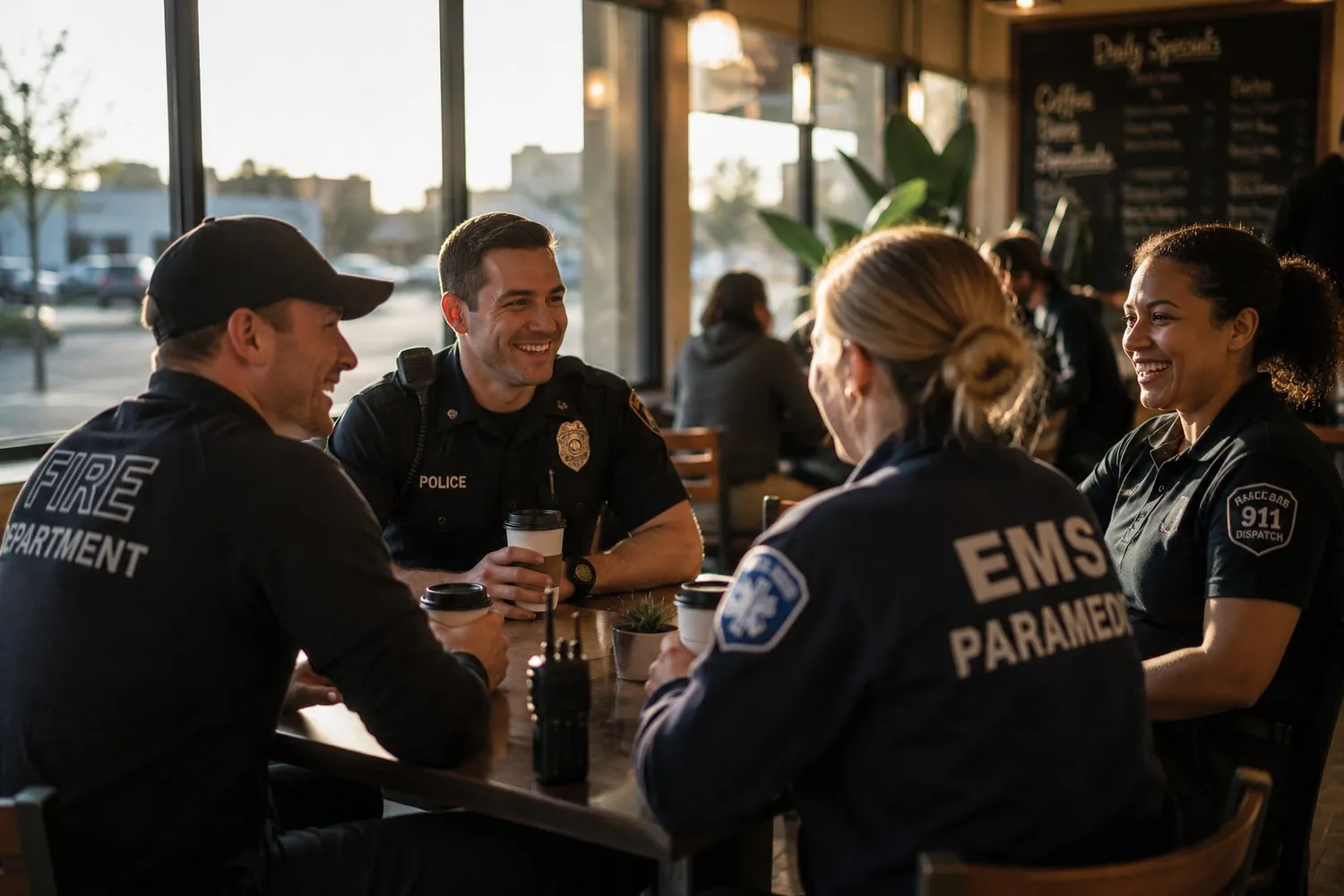
Care is built around the realities of fire, EMS, law enforcement, and dispatch:
- PTSD, from single incidents or cumulative exposure
- Depression and irritability that build across years on the job
- Panic symptoms, often first appearing on or after calls
- Insomnia and shift wrecked sleep, including nightmares
- Alcohol use that crept up as a wind down tool, screened respectfully
- Anger that has started costing relationships at home or discipline at work
Keep exploring
Related care and next steps
Frequently asked questions
Good questions, clear answers
Is care confidential from my department?
Yes. Care is private and HIPAA compliant, kept entirely separate from your employer or department.
Do you treat PTSD?
Yes. We evaluate and treat post traumatic stress with non controlled medication when appropriate and coordinated, evidence based trauma therapy.
Can visits fit around shifts?
Yes. We schedule flexibly around rotating and overnight shifts.
Will my department or agency find out I am getting treatment?
No. We sit completely outside department systems, we do not bill insurance, and records move only with your written authorization. Fitness for duty processes belong to your agency; our work is your private medical care.
Do your clinicians understand first responder culture?
We care for firefighters, EMS, law enforcement, and dispatchers, and we know the rhythms: the dark humor, the reluctance to hand a problem to a stranger, and the difference between a bad week and a changed baseline. You will not need to translate your world.
I had a bad call recently. Is it too early to come in?
No. Early support after a critical incident is reasonable, and most people do not need formal treatment after one event. An evaluation sorts normal recovery from symptoms that are taking root, and either answer is useful.
Can my spouse or partner join a session?
Yes, whenever you want them there. Partners often see the changes first, and a single joint visit can do a lot for the home front. It is always your call.
Is a PTSD diagnosis a career ender?
No. PTSD is treatable, and effective treatment is what protects careers. Untreated symptoms, especially sleep loss, anger, and alcohol use, are what tend to create the professional problems.
Sources
Sources and further reading
Get started with first responder care
You carry a lot. You don't have to carry it alone. Choose your state, complete the intake, and book your evaluation online.
Join Our Waiting List