Women's Mental Health
Postpartum Depression
Postpartum depression is depression that arrives during pregnancy or in the weeks and months after birth. It's far more than the baby blues, and it's not a sign of being a bad parent. It's common, it's medical, and it gets better with care, often quickly.
Medically reviewed by Shariq Refai, MD, MBA, FAPA, board certified psychiatrist · Last reviewed September 23, 2026 · Updated October 4, 2026 · Editorial policy
Already know your state is active? Skip to the waitlist.


Understanding it
What's postpartum depression?
Postpartum depression is a real medical condition that can begin during pregnancy or in the weeks and months after your baby arrives. It's a lasting low mood, heavy anxiety, and exhaustion that go well past the normal ups and downs of caring for a newborn, and it gets in the way of daily life and bonding.
This is common. It touches roughly one in seven new parents, which means you're far from alone, even when it feels that way at 3 a.m. with everyone else asleep. Reaching out for help isn't a sign that you've failed at parenting. It's a strength, and it's one of the most protective things you can do for yourself and your baby.
It's also very treatable. With an accurate evaluation and the right plan, most people feel meaningfully better, often within a few weeks of starting care. The hardest part is usually saying it out loud, and we make that part as easy as we can.
How it shows up
Signs of postpartum depression
The baby blues are common and tend to fade within about two weeks. Postpartum depression runs deeper and lasts longer. You might notice several of these most days:
Intrusive thoughts don't mean what you fear they mean
Many new parents have sudden, scary thoughts they'd never act on, like an image of the baby getting hurt. These intrusive thoughts are a symptom, not a verdict on your character or your love for your child. Naming them to a clinician almost always brings relief and the right support.
If you ever have thoughts of harming yourself or your baby, or you feel disconnected from reality, please treat that as urgent and reach out for help right away. That's covered in the safety question in our FAQ below.
- Sadness, emptiness, or hopelessness that won't lift
- Intense anxiety or panic, often centered on the baby
- Feeling distant or struggling to bond with your baby
- Exhaustion that's heavier than ordinary newborn tiredness
- Trouble sleeping even when the baby sleeps, or sleeping far too much
- Irritability, anger, or feeling on edge with the people around you
- Guilt, worthlessness, or a sense that you're failing
- Unwanted, frightening intrusive thoughts, which are common and treatable
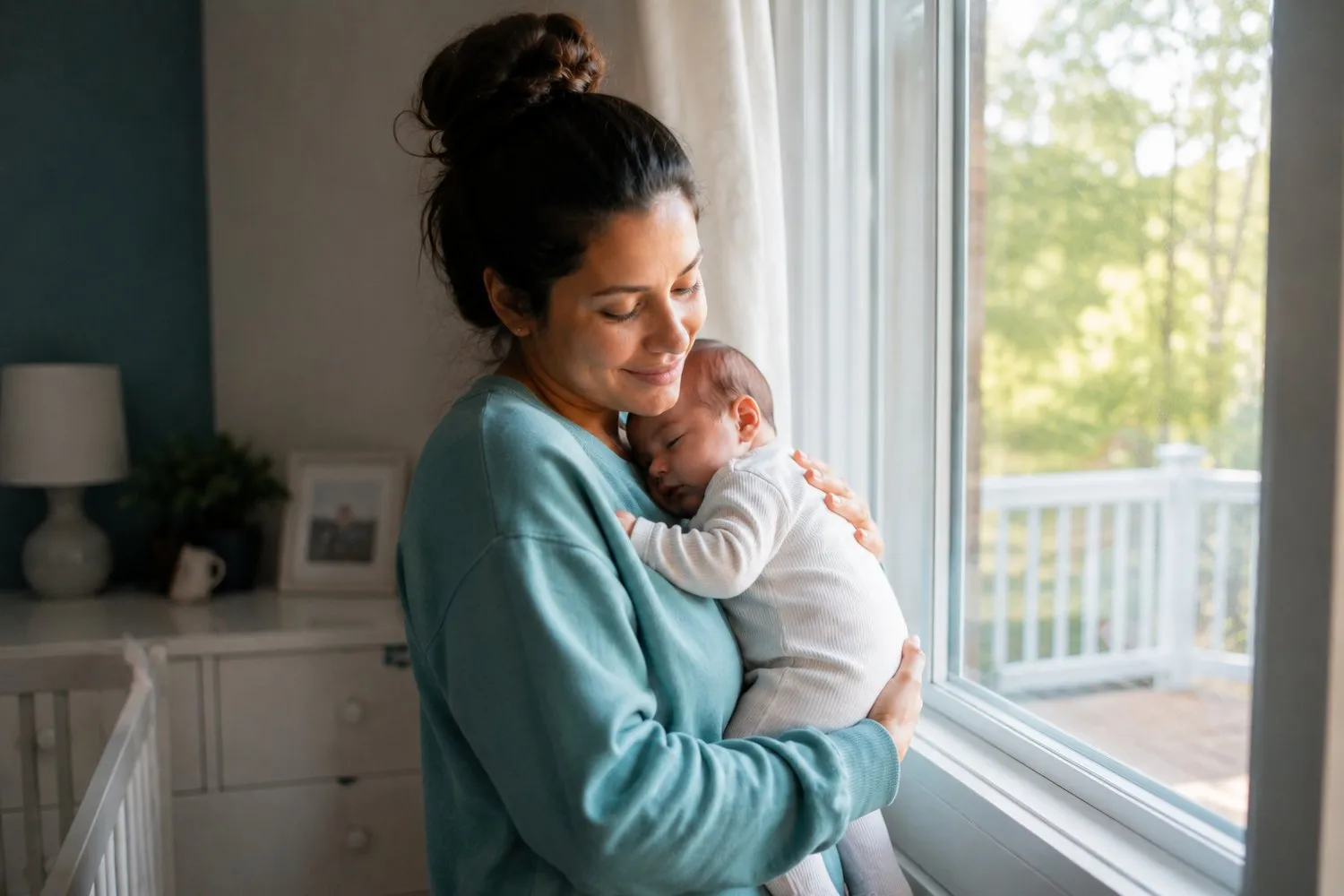
Not one thing
Postpartum and perinatal conditions
Postpartum depression sits within a larger family of perinatal mood and anxiety conditions. Knowing which pattern fits helps shape the plan, so part of the evaluation is sorting out what's really going on.
Why naming it matters
These conditions overlap but call for different plans. Postpartum psychosis in particular is a medical emergency, which is why we take any sign of it seriously. A careful evaluation tells us which path fits you, and it's the step that opens the door to feeling better.
- Baby blues: mild tearfulness and mood swings that ease on their own within about two weeks
- Postpartum depression: lasting low mood, anxiety, and exhaustion that interfere with daily life and bonding
- Perinatal anxiety: persistent worry, racing thoughts, or panic during pregnancy or postpartum
- Postpartum OCD: distressing intrusive thoughts paired with checking or avoidance, which is treatable
- Postpartum psychosis: a rare but serious emergency with confusion or loss of touch with reality that needs immediate care
Why it happens
What causes postpartum depression
Postpartum depression isn't caused by anything you did or didn't do. It grows out of biology and circumstance colliding at one of the most demanding times of your life, and understanding that helps lift the weight of blame.
This is biology, not a character flaw
It can help to hold onto one idea: postpartum depression is a health condition, the same way a thyroid problem is. It says nothing about how much you love your baby or how good a parent you'll be. Treatment is what helps, and it works.
- A steep drop in estrogen and progesterone in the days after birth
- Sleep deprivation and the physical toll of recovery and feeding
- A personal or family history of depression or anxiety
- Thyroid changes that sometimes follow delivery
- Stress, isolation, financial strain, or limited support at home
- A difficult pregnancy, birth, or feeding experience
Getting it right
How postpartum depression is diagnosed
Many clinicians use a brief, validated screening questionnaire, such as the Edinburgh Postnatal Depression Scale, to gauge how heavy symptoms are and to track them over time. It's a few simple questions, and it gives us a clear starting point.
If screening points toward postpartum depression, the next step is a full psychiatric evaluation, a gentle, thorough conversation about your mood, sleep, anxiety, bonding, history, and safety. We also screen for thyroid changes and other medical contributors. There's no judgment in any of it, just a careful effort to understand what's happening so we can match you with the right plan.
What helps
How we treat postpartum depression
Postpartum depression responds well to treatment, and most people feel meaningfully better with the right plan. We build that plan with you, around the realities of caring for a newborn.
Psychiatry, therapy, or both?
Psychiatry and therapy each help, and together they often help more. Psychiatry focuses on diagnosis and medication when it's needed. Therapy gives you space to process the enormous shift of new parenthood and build coping skills. You don't have to pick one, and we'll help you find the right mix.
If you're breastfeeding, treatment decisions are made carefully and together. Several non controlled antidepressants are considered compatible with breastfeeding, and untreated depression carries real risks too, so we weigh both sides honestly and choose with you. shrinkMD doesn't prescribe controlled substances.
- A full evaluation that screens for thyroid and other medical contributors and checks on safety
- Medication when it helps: non controlled antidepressants, with breastfeeding safety carefully considered
- Therapy coordination: evidence based approaches that support mood, anxiety, and the huge adjustment of new parenthood
- Practical support for sleep, recovery, and building a circle of help around you
- Close follow up, since needs can shift quickly in the postpartum months

Care at shrinkMD
What postpartum care looks like here
Your first visit is a full psychiatric evaluation by secure video, as clinician availability allows. You'll meet a certified clinician (a psychiatrist or psychiatric nurse practitioner) who takes time to hear your story before building a plan with you. You can do it from your couch, baby in arms if that's where they are.
If medication is part of the plan, we'll talk through the options and timing, and we'll factor in breastfeeding from the start. Antidepressants usually take a couple of weeks to a month or so to reach their full effect, so we begin thoughtfully, watch for side effects, and stay in close touch.
Because care is virtual, you don't have to pack up a newborn and get to an office to be seen. You stay with a clinician who knows your history, so as the postpartum months change, your care keeps up with you.
“New parents come to me certain they're failing, when really they're carrying an illness no amount of willpower can fix. Seeing the relief when they realize this is treatable, and that asking for help was the brave choice, is the best part of my work.”
Shariq Refai, MD, MBA, Founder of shrinkMD
Key fact. About 1 in 8 women who recently gave birth experience symptoms of postpartum depression, according to CDC data across U.S. states. Source: Centers for Disease Control and Prevention.
Myths and facts
Clearing up postpartum myths
Myth: Good parents don't get depressed.
Fact: Postpartum depression has nothing to do with how much you love your baby. It's a medical condition driven by hormones, sleep loss, and biology, and it's treatable.
Myth: You just need to push through until it passes.
Fact: Untreated postpartum depression can last and deepen. Treatment helps you feel better faster and protects both you and your baby.
Myth: You can't take medication while breastfeeding.
Fact: Several antidepressants are considered compatible with breastfeeding. We weigh the options with you, because untreated depression carries real risks too.
Keep exploring
Related care and next steps
Related conditions
Go deeper, across The Shrink Network
The terms and the medications, explained
Plain-language references written and reviewed by Dr. Refai across the network. They are education, not a prescription, and shrinkMD does not prescribe controlled substances.
Understand the condition
For the diagnostic and evidence reference on Postpartum Depression, read the Shrinkopedia entry. shrinkMD provides the clinical care; Shrinkopedia is education, not medical advice.
Frequently asked questions
Good questions, clear answers
How is postpartum depression different from the baby blues?
Baby blues are mild and fade within about two weeks. Postpartum depression is more intense, lasts longer, and interferes with daily life and bonding. It needs treatment, and it responds well to it.
How common is postpartum depression?
Very. It affects roughly one in seven new parents. It's one of the most common complications of childbirth, which is part of why screening and support matter so much, and why you've nothing to be ashamed of.
Does having postpartum depression mean I'm a bad parent?
Not at all. It's a medical condition driven by hormones, sleep loss, and biology, not a reflection of your love or ability. Reaching out for help is a strength, and it's one of the best things you can do for your baby.
How is postpartum depression diagnosed?
Often it starts with a brief screening such as the Edinburgh Postnatal Depression Scale, followed by a full psychiatric evaluation that reviews your mood, sleep, anxiety, bonding, history, and safety, and screens for thyroid and other medical causes.
Can I get treated while breastfeeding?
Yes. Several non controlled antidepressants are considered compatible with breastfeeding. We make that decision carefully and together, balancing the benefits against the real risks of leaving depression untreated.
Is online care good for postpartum depression?
Yes, and it removes a big barrier, since leaving home with a newborn is hard. Evaluation, medication when appropriate, and follow up all work well by secure video, often as soon as availability allows of reaching out.
What if I'm having scary thoughts about my baby?
Intrusive thoughts are a common, treatable symptom and don't mean you'll act on them. Please tell your clinician so we can help. If you ever feel you might act on a thought of harming yourself or your baby, or you feel disconnected from reality, that warrants urgent help right away.
What if I'm in crisis or thinking of harming myself or my baby?
If you're in danger, call or text 988 or call 911 now. shrinkMD provides scheduled outpatient care and isn't a crisis service, but we take safety seriously and build it into every plan.
Related reading
shrinkMD treats this by secure video. See where we offer care and how care works.
Clinical reference: Medscape.
Your next step in The Shrink Network
You are here: shrinkMD, the clinical care layer of The Shrink Network.
Each site in the network has one job. No matter where you enter, we help you find the next step that makes sense.
Get clinical care with shrinkMD
Want to understand more first?
How this page is reviewed and how to cite it
EducationalVerify independently: ORCID · Wikidata · NPI Registry · All shrinkMD credentials
shrinkMD. (2026). Postpartum Depression Treatment Online [Web page, medically reviewed by Shariq Refai, MD, MBA]. https://shrinkmd.com/postpartum-depressionSources
Sources and further reading
Get started with postpartum care
shrinkMD is opening first in Maine and Nebraska. Join the waitlist and we'll email you when booking opens in your state.
Get StartedAlready know your state is active? Skip to the waitlist.